— several stages, the crowd and the evening in one day —

City Festival Photography

← blog

Photos from a city festival keep working long after the tents come down: in the press release, on social media while the festival is on, in the report to partners and sponsors, in the evaluation and in next year’s programme. But a festival is not one event on one stage — it is several stages, thousands of visitors, food stalls, families with children, performers and an evening programme, all on the same day.

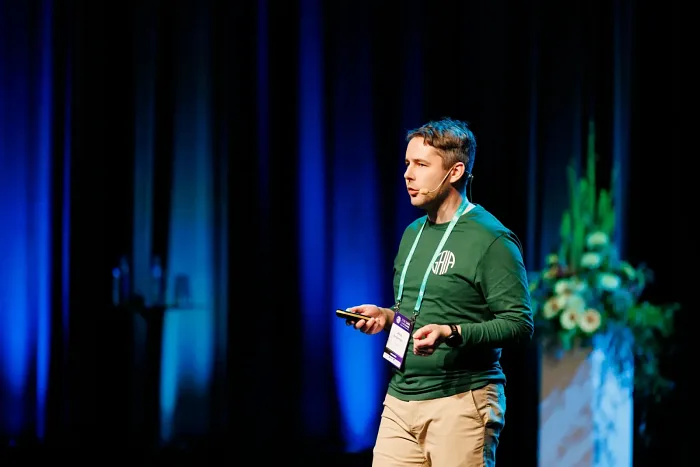
I have worked as a photographer for 15 years and done more than 3,000 shoots. Among the assignments: the street food festival within Göteborgs Kulturkalas 2025 in central Gothenburg, the Side by Side Music Camp for the Gothenburg Symphony Orchestra with over 2,000 participants on 11 stages, concerts at Lindholmen Street Food Market, the Gothenburg AI Conference GAIA at Svenska Mässan with 1,250 delegates, and the Care Connect with Ukraine project. Here is how I plan and shoot a festival day.

A crowd between white festival tents and food trucks on a square in central Gothenburg
01

Several stages and locations in one day

A festival is spread across a whole area, so we start with the programme: which stages have to be covered, when the opening and the evening headliner are on, how long it takes to walk between locations. If two important items clash, we solve it before the festival, not during it.

At the same time we go through the practical side: accreditation and passes, which areas I may enter and which safety rules apply. I follow the organiser’s and the stewards’ instructions and never block performers, visitors or escape routes.

The photos in this article are from the street food festival within Göteborgs Kulturkalas 2025. My assignment was the street food festival; at the request of its organisers I also took a few photos of the rest of the kalas.

2025 assignmentthe street food festival, Kulturkalas
Send in advanceprogramme, stages, times
We agree onroute, accreditation, safety rules
An audience with hands and phones in the air in front of the festival stage
02

The crowd — proof that people came

A packed square in front of the stage is the picture that does the most work afterwards: in the evaluation, in funding applications and in conversations with partners about next year. Numbers in a report are one thing — a photo of the crowd is another.

I shoot the audience both wide, so the site and the scale are visible, and close: faces, hands in the air, a group singing along, somebody laughing in the middle of it all.

Shot typesoverview, crowd, faces
Used forreports, applications, next year’s programme
A band on stage in front of the Göteborgs Kulturkalas backdrop: the singer with a guitar raises an arm to the audience
03

The stage, the performers and the light

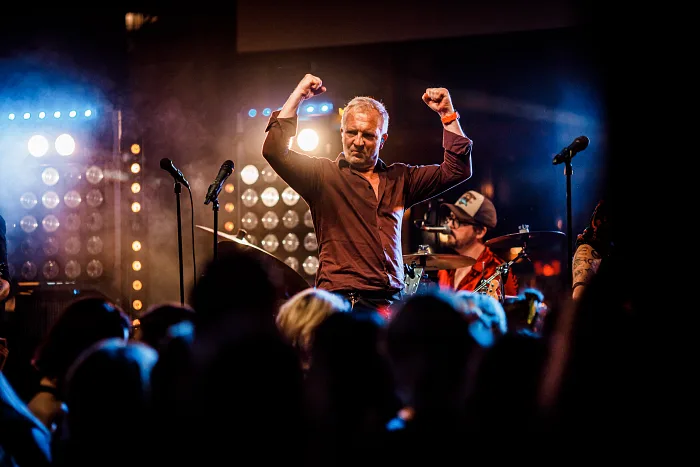
Stage lighting, backlight and a large screen behind the performers make stage photos harder than they look. I shoot every act in several versions: a close-up of the performer, a wider frame with the whole band, and a full shot with the audience in front of the stage — the last one is what shows the place was full.

I move quietly in the stage area and never block the view for visitors. With open stages and short sets we plan which acts matter most, so no headliner is missed.

Per actclose-up, whole band, with audience
A host with a microphone running a contest on stage in evening stage light
04

Programme items and activities

Between the concerts, most things happen on the smaller stages: contests, tastings, cooking, talks, prize-givings. These are the photos that show the festival had content, not just a stage and a sea of people.

Such moments are short and cannot be repeated. If they are in the programme, I build my route around them.

Short and one-offplanned into the route
Five visitors smiling at the camera at a standing table with food in the festival area
05

The guests: candid portraits

Guest portraits are what organisers use most: people smiling at the camera, groups of friends at the standing tables, visitors showing off their food. They can be published straight away, and the guests share them on themselves.

I always ask before taking that kind of photo, so everyone in the frame knows it may be published. I only photograph children if you as the organiser have a consent routine on site.

Candid photosguests, groups of friends, food shots
A couple dancing on the asphalt in front of the stage, more dancers behind them
06

Dancing, meetings and atmosphere

The photos that travel furthest are rarely the arranged ones: people dancing in front of the stage, guests talking over a standing table, somebody running into an old friend in the crowd.

I am friendly and active and blend into the company — visitors relax, and the pictures come out alive rather than posed.

Works best forsocial media while the festival is on
Staff in a street food stall serving noodles to a guest
07

Exhibitors, food trucks and stalls

Exhibitors are an audience of their own, and they need photos too: the stall, the staff at work, the food, the queue at the hatch. They use the pictures themselves and are more likely to come back next year.

Tell me in advance which exhibitors and partners matter, and I shoot a short separate series for each one, with their signs and logos legible in the frame.

Per exhibitorstall, staff, food, queue
A festival sign on the street: Engångsfritt för klimatet — Single-use free for the climate
08

Signs, partners and messages in frame

Everything you built on site should be documented as well: the festival’s own signage, partner areas, return stations and sustainability messages. Those are exactly the photos that are missing when the report has to be written and the message shown rather than just described.

Give me a list of what must appear in the photos — signs, logos, installations — and I work through it during the day and label the files for you.

Senda list of signs and partners
A DJ behind the mixing desk on an evening stage in purple spotlights
09

The evening: stage light, darkness and flash

When it gets dark everything changes: coloured spotlights, smoke, movement and very little light. These are the same conditions as in a nightclub. I have photographed at Nefertiti, Valand, Trädgår’n, Eight Nightclub and Balambaras — if I can handle a club night, I can handle your evening stage.

Where the stage light is not enough I work with flash, without ruining the mood of the picture or blinding the performers.

Evening programmestage light, smoke, flash when needed
Two laughing visitors in sunglasses taking a selfie at the festival
10

Delivery, rights and price

Expect around 100 finished photos per hour. The first images are delivered within a day — so if the festival runs over several days, you can publish while it is on instead of afterwards. The full set arrives within 7 days, in formats for web, social media, print and press.

I invoice your organisation, and the photos may be used commercially: in marketing for the festival and the city, in press material and in partners’ reports. On request I work under a non-disclosure agreement.

Price: SEK 1,500 per hour excl. VAT, minimum 2 hours, with no surcharge for evenings or weekends. I travel to Lerum, Alingsås and Borås — longer trips by agreement.

Volumeabout 100 photos per hour
Deliveryfirst photos within a day, all within 7 days
PriceSEK 1,500/h excl. VAT, minimum 2 hours

Planning a city festival or a public event?

Send the date, the location, the programme and how many visitors you expect. I will propose a plan for the day: which stages and programme items I can cover, how many hours are needed and when the photos are delivered.

I speak Swedish, English, Russian and Ukrainian — useful at a festival where visitors come from all over the city.

Ask a Question Event photography